Pasta Primavera Recipe
Introduction
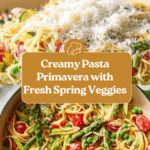
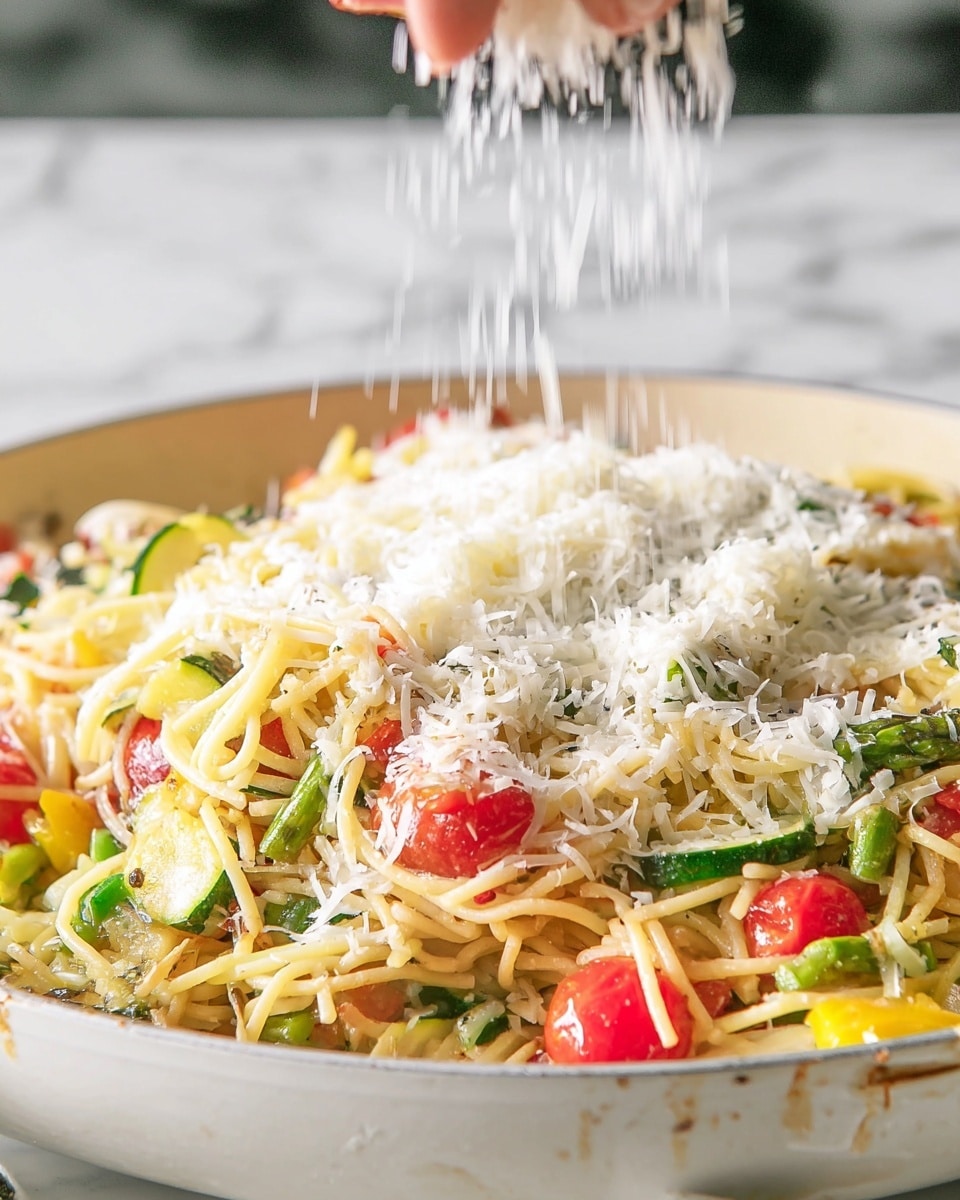
Pasta Primavera is a vibrant and fresh pasta dish packed with colorful vegetables and a creamy sauce. It’s perfect for a light yet satisfying meal that celebrates the flavors of spring and summer produce.
Ingredients
- Kosher salt
- 12 oz. spaghetti
- 1/4 cup (or more) extra-virgin olive oil
- 1 large zucchini, sliced into 1/2″ half-moons
- 1 bunch asparagus, trimmed and quartered crosswise
- 1/2 red onion, sliced into 1/4″ half-moons
- 2 small leeks, cut into 1/2″ half-moons
- 1 red bell pepper, seeds and ribs removed, chopped
- 5 cloves garlic, finely chopped
- 1 cup grape tomatoes
- 3/4 cup heavy cream
- 1/3 cup frozen peas, thawed
- 2 oz. Parmesan, finely grated, plus more for serving
- Lemon zest and juice from 1 small lemon (optional)
- Freshly ground black pepper
Instructions
- Step 1: In a large pot of boiling salted water, cook the spaghetti, stirring occasionally, until just under al dente (about 6 to 7 minutes). Reserve 1 1/2 to 2 cups of the pasta water before draining.
- Step 2: While the pasta cooks, heat 1/4 cup olive oil in a large high-sided skillet over medium-high heat. Cook the zucchini, stirring occasionally, until it starts to soften and turn lightly golden but remains vibrant green, about 3 to 4 minutes. Season with 1/2 teaspoon salt. Add asparagus, season with another 1/2 teaspoon salt, and cook, stirring often, until vibrant green and tender, about 4 minutes. Transfer the vegetables to a plate.
- Step 3: Reduce the heat to medium. Add 1 to 2 tablespoons of oil to the skillet if needed. Add the red onion and leeks and cook, stirring occasionally, until they begin to wilt and caramelize, about 5 minutes. Season with 1 teaspoon salt. Add the chopped red bell pepper and cook, stirring and reducing heat if the onions or leeks start to char, until the pepper softens slightly, about 3 to 4 minutes. Add the garlic and cook, stirring, until fragrant and the onions are translucent, about 2 minutes.
- Step 4: Lower the heat to medium-low. Stir in the grape tomatoes, heavy cream, peas, and reserved 1/2 cup of pasta water. Cook, stirring occasionally, until the tomatoes are tender and beginning to burst, about 2 to 3 minutes. Add the cooked spaghetti, reserved zucchini and asparagus, Parmesan, and a splash of the pasta water. Toss to combine, adding more pasta water as needed, until the sauce is glossy and the cheese has melted.
- Step 5: Stir in the lemon zest and juice, if using, and season with freshly ground black pepper to taste. Serve immediately with extra Parmesan on the side.
Tips & Variations
- Use fresh seasonal vegetables you have on hand, such as peas, broccoli, or cherry tomatoes, for variation.
- For a lighter option, substitute half-and-half for the heavy cream.
- Add fresh herbs like basil or parsley at the end for an extra layer of flavor.
- If you prefer a bit of heat, add red pepper flakes when cooking the garlic.
Storage
Store any leftovers in an airtight container in the refrigerator for up to 3 days. Reheat gently on the stovetop over low heat, adding a bit of water or cream to loosen the sauce if it has thickened. This dish is best enjoyed fresh but can hold up well when properly stored.
How to Serve
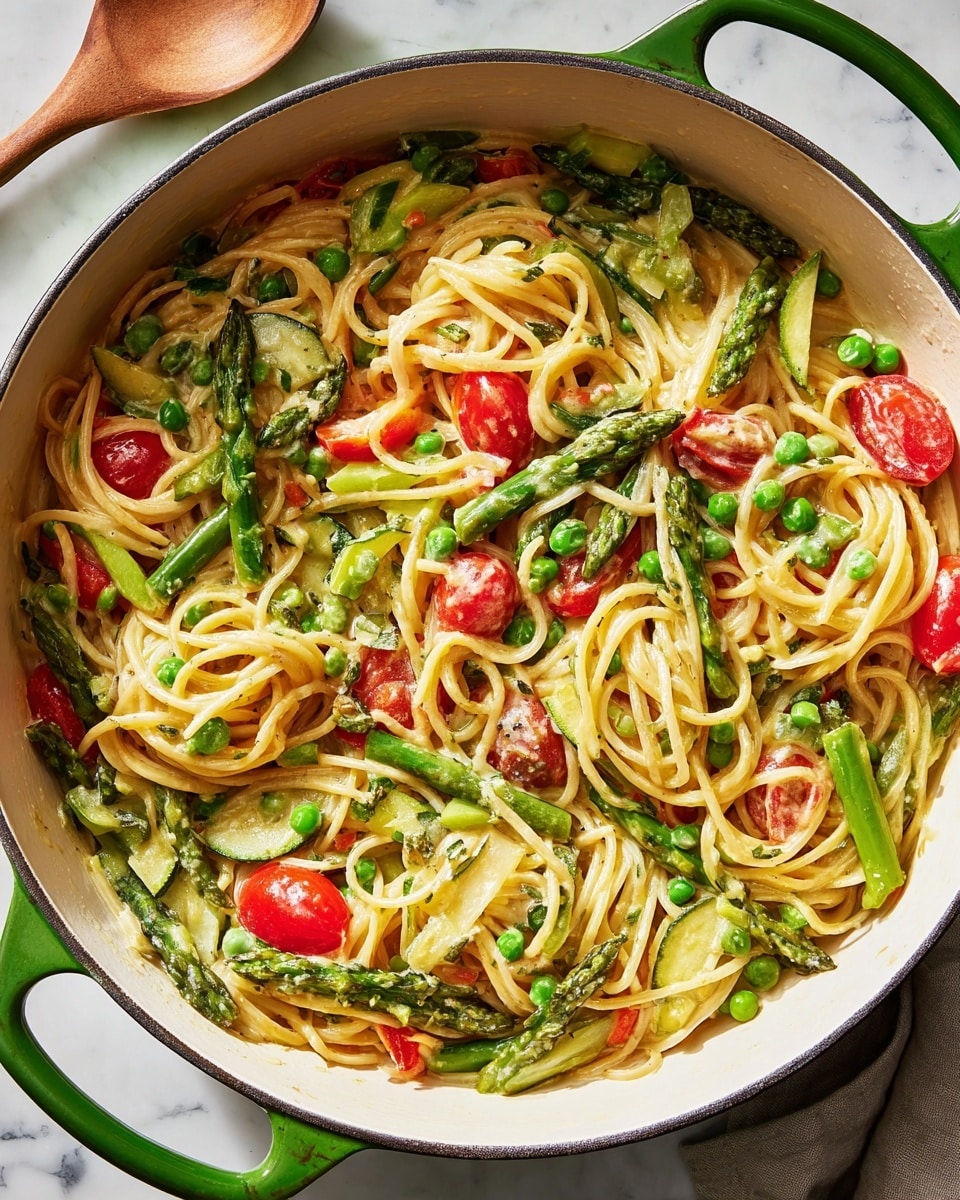
Serve this delicious recipe with your favorite sides.
FAQs
Can I use a different type of pasta?
Yes, you can substitute spaghetti with other long pasta like fettuccine or linguine, or even short pasta such as penne or fusilli. Just adjust the cooking time accordingly.
Is it possible to make this recipe vegan?
To make it vegan, use a plant-based cream alternative and substitute Parmesan with a vegan cheese or nutritional yeast. Make sure to use olive oil and omit any dairy ingredients.
Print
Pasta Primavera Recipe
- Total Time: 35 minutes
- Yield: 4 servings 1x
- Diet: Vegetarian
Description
Pasta Primavera is a vibrant and creamy pasta dish loaded with fresh spring vegetables like zucchini, asparagus, leeks, and bell peppers, all tossed in a luscious Parmesan cream sauce. This quick stovetop recipe balances tender pasta with crisp-tender veggies and a bright touch of lemon, making it perfect for a fresh and satisfying meal.
Ingredients
Basic Ingredients
- Kosher salt
- 12 oz. spaghetti
- 1/4 cup (or more) extra-virgin olive oil
Vegetables
- 1 large zucchini, sliced into 1/2” half-moons
- 1 bunch asparagus, trimmed, quartered crosswise
- 1/2 red onion, sliced into 1/4” half-moons
- 2 small leeks, cut into 1/2” half-moons
- 1 red bell pepper, seeds and ribs removed, chopped
- 5 cloves garlic, finely chopped
- 1 cup grape tomatoes
- 1/3 cup frozen peas, thawed
Dairy & Flavorings
- 3/4 cup heavy cream
- 2 oz. Parmesan, finely grated, plus more for serving
- Lemon zest and juice from 1 small lemon (optional)
- Freshly ground black pepper
Instructions
- Cook the Pasta: Bring a large pot of salted water to a boil. Add the spaghetti and cook, stirring occasionally, until just under al dente, about 6 to 7 minutes according to package directions. Reserve 1 1/2 to 2 cups of the pasta cooking water before draining.
- Sauté Zucchini and Asparagus: Meanwhile, heat 1/4 cup extra-virgin olive oil in a large high-sided skillet over medium-high heat. Add the zucchini and cook, stirring occasionally, until it starts to soften and turn lightly golden while still vibrant green, about 3 to 4 minutes. Season with 1/2 teaspoon kosher salt. Add the asparagus, season with another 1/2 teaspoon salt, and cook, stirring often, until asparagus is tender and vibrant green, about 4 minutes. Transfer these vegetables to a plate.
- Cook Onions, Leeks, and Bell Pepper: Reduce the heat to medium. If needed, coat the skillet with 1 to 2 tablespoons of olive oil. Add the sliced red onion and leeks, cooking and stirring occasionally until they begin to wilt and caramelize, about 5 minutes. Season with 1 teaspoon kosher salt. Add the chopped red bell pepper and cook, stirring and adjusting heat as necessary to avoid charring, until the pepper softens slightly, about 3 to 4 minutes. Stir in the chopped garlic and cook until fragrant and the onions are translucent, about 2 minutes.
- Simmer the Sauce and Combine: Lower the heat to medium-low. Add the grape tomatoes, heavy cream, thawed peas, and reserved 1/2 cup pasta water to the skillet. Cook, stirring occasionally, until the tomatoes are tender and beginning to burst, about 2 to 3 minutes. Add the cooked spaghetti along with the reserved zucchini and asparagus. Sprinkle in the grated Parmesan and a splash of pasta water. Toss everything together, adding more pasta water as needed, until the sauce is glossy and the cheese melts to coat the pasta evenly.
- Finish and Serve: Stir in lemon zest and juice if using, and season with freshly ground black pepper to taste. Serve hot, topped with additional grated Parmesan if desired.
Notes
- Be sure to reserve pasta water to adjust the sauce consistency and help it cling to the pasta.
- Vegetables should remain vibrant and slightly crisp for the best texture—avoid overcooking.
- Lemon zest and juice add a refreshing brightness but can be omitted if preferred.
- Use freshly grated Parmesan for better melting and flavor.
- This dish can be made vegetarian by ensuring the Parmesan used is suitable for vegetarians.
- Prep Time: 15 minutes
- Cook Time: 20 minutes
- Category: Main Course
- Method: Stovetop
- Cuisine: Italian
Keywords: Pasta Primavera, spring pasta, vegetarian pasta, creamy pasta with vegetables, Italian pasta recipe